


 Textile Industry
 Wood, Furniture and Construction Industry
 Paper, Printing and Packaging Industry
 Medical, Industrial and Home Type Glove Industry
 Filter and Metal Industry


Differences Between Synthetic Latex and Natural Latex
Latex is a flexible and durable type of polymer with a wide range of uses in both industrial production and daily life. However, beneath this general definition lie two fundamental sources: natural latex and synthetic latex. These two types of latex differ structurally and show distinct characteristics depending on their areas of use.
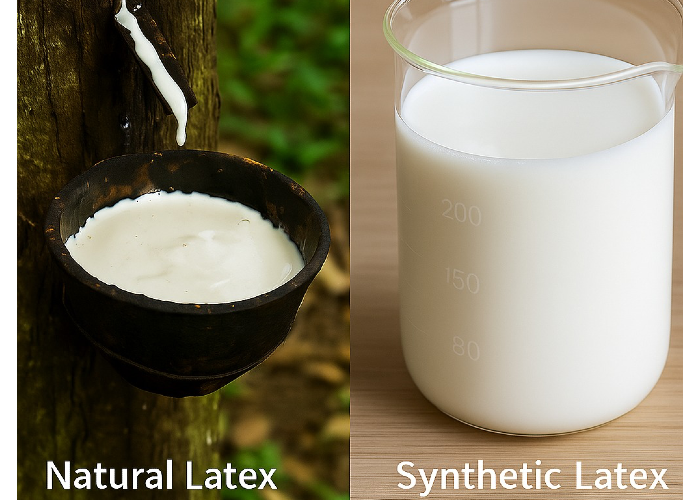
Natural latex is a biologically sourced raw material obtained from the rubber tree. This milky sap contains a high percentage of polyisoprene and naturally provides elasticity. It is commonly used in products such as gloves, balloons, and mattresses. However, natural latex contains certain proteins that can trigger allergic reactions in the human body. This makes it a significant disadvantage, particularly in medical applications. Additionally, in terms of cost, natural latex is significantly more expensive than synthetic latex.
Synthetic latex, on the other hand, is a man-made type of latex produced through the polymerization of petrochemical-based monomers. The most common examples include SBR (styrene-butadiene rubber), NBR (acrylonitrile-butadiene rubber), and CR (chloroprene rubber). Synthetic latexes can be tailored during production through specific formulations to meet the technical requirements of various applications. Compared to natural latex, they offer better chemical resistance, water resistance, and temperature tolerance. Moreover, since they do not contain proteins, they do not cause allergic reactions.
From an industrial perspective, the areas in which natural and synthetic latex are preferred differ. Natural latex is favored in products where elasticity and comfort are a priority. In contrast, synthetic latex is more commonly used in fields such as construction chemicals, carpet backing, paper lamination, glove production, automotive tire manufacturing, and textiles. The primary reason for this is that synthetic latex provides consistent pricing, controlled production, and customizable durability levels for specific applications.
At Tutsan Polimer Kimya, we offer high-performance solutions tailored to various industries, particularly leveraging our expertise in synthetic latex.
07 July 2025